HomeAll CoursesLadder Safety
Physical Hazards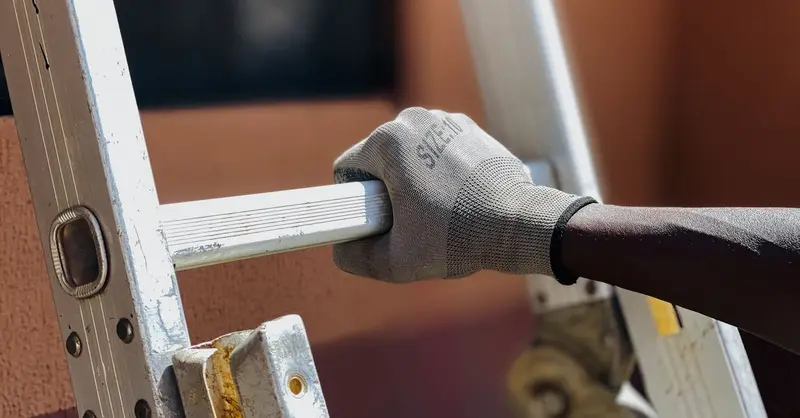
Ladder Safety
A focused, visual microcourse on using portable ladders safely at work. In about 25 minutes you'll learn when a ladder is the right tool, how to select and inspect step, extension and platform ladders, how to set them up at the correct angle and the safe-use rules, including three points of contact, that stop falls. Built around the model WHS Managing the Risk of Falls code and AS 1892 (AS 1892.1:2018 and AS 1892.5:2020), with diagrams, a real decision scenario and quick self-checks. It complements Working at Heights Awareness.
Also relevant for: Farm and Rural, Construction and Trades, Electrical, Health Care, Aged Care and Community, Manufacturing and Industrial, Plumbing and Gas, Retail and Hospitality, Warehouse, Transport and Logistics
What You Will Learn
- Recognise when a portable ladder is a suitable control for working at height and when a safer option is required
- Select the right type and duty rating of ladder for the task, in line with AS 1892 (AS 1892.1:2018 and AS 1892.5:2020)
- Carry out a pre-use inspection and remove a damaged ladder from service
- Set up a ladder correctly, including the 4:1 angle, secure footing and safe placement
- Apply three points of contact and other safe-use rules to prevent falls
Course Content
Final Assessment: 10 questions, 80% pass mark, retakes available
Who This Course Is For
Tradespeople, maintenance, warehouse, retail, cleaning and office staff and supervisors, anyone who uses portable step, extension or platform ladders at work.
Sources and Legal References
This course is aligned to 19 official sources. Legal and regulatory references checked between 31 August 2026 and 1 November 2026.
Sources and Further Reading
This course draws on the following official sources. Always rely on the current version on the regulator’s website.
- LegislationWork Health and Safety Act 2011 (Cth)As at 31/08/2026
- LegislationWork Health and Safety Act 2011 (NSW)As at 31/08/2026
- LegislationWork Health and Safety Act 2011 (Qld)As at 31/08/2026
- LegislationWork Health and Safety Act 2020 (WA)As at 31/08/2026
- LegislationWork Health and Safety Act 2012 (SA)As at 31/08/2026
- LegislationWork Health and Safety Act 2012 (Tas)As at 31/08/2026
- LegislationWork Health and Safety Act 2011 (ACT)As at 31/08/2026
- LegislationWork Health and Safety (National Uniform Legislation) Act 2011 (NT)As at 31/08/2026
- LegislationOccupational Health and Safety Act 2004 (Vic)As at 31/08/2026
- Regulator guidanceSafe Work Australia, Working at heightsAs at 31/08/2026
- Australian StandardAS 1892As at 03/09/2026
- LegislationWork Health and Safety Regulation 2011 (ACT)As at 31/10/2026
- LegislationWork Health and Safety Regulation 2025 (NSW)As at 01/11/2026
- LegislationWork Health and Safety (National Uniform Legislation) Regulations 2011 (NT)As at 31/10/2026
- LegislationWork Health and Safety Regulation 2011 (Qld)As at 31/10/2026
- LegislationWork Health and Safety Regulations 2012 (SA)As at 13/09/2026
- LegislationWork Health and Safety Regulations 2022 (Tas)As at 31/10/2026
- LegislationOccupational Health and Safety Regulations 2017 (Vic)As at 01/11/2026
- LegislationWork Health and Safety (General) Regulations 2022 (WA)As at 31/10/2026
Always rely on the current version on the regulator’s website.
Accreditation: This is a non-accredited awareness microcourse. It builds ladder-safety knowledge that complements Working at Heights Awareness, but it does not issue a unit of competency and is not a substitute for task-specific instruction or any accredited or high-risk work training (such as working at heights or scaffolding) required in your state or territory.
$39.00
inc GSTSeven day refund if you have not started
Or
For employers and teams
Buy Seats for Your Team
$39.00 per seat, inc GST
Total inc GST$195.00
Or
What You Get

Certificate of Completion
This is to certify that
Sample Learner
has successfully completed
Ladder Safety
All learning modules and the final assessment
Scan the QR code, or enter certificate ID WP-SAMPLE-0001 at workproof.com.au/verify
Kam Askari
Director, Creative Directions Management Consulting Pty Ltd

This is a certificate of completion of a non-accredited professional development course. It is not a nationally recognised qualification, a VET statement of attainment, a competency card, a licence, or evidence of competency. It is issued by Creative Directions Management Consulting Pty Ltd, which is not a Registered Training Organisation.
Sample layout. Certificate ID WP-SAMPLE-0001 verifies as Hazardous Manual Tasks and Manual Handling Safety.
- Certificate verified by its ID
- 100% online, self-paced
- Six months of access
Bought for yourself: six months of access from the day you pay. Team seat: six months from the day the worker activates their code.
Level: Beginner