HomeAll CoursesPreventing Slips, Trips and Falls in the Workplace
Physical Hazards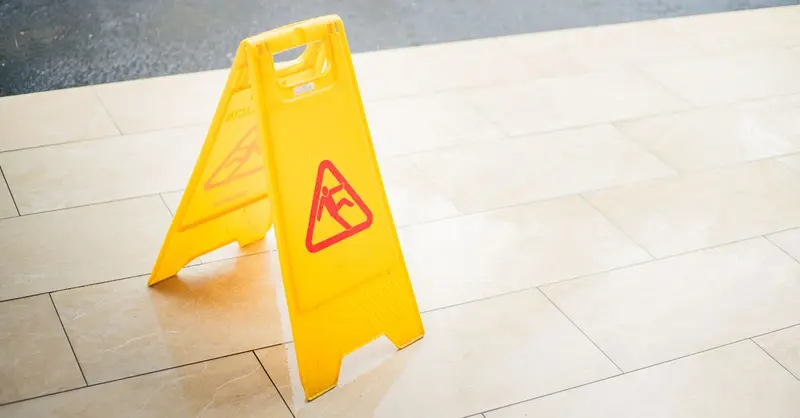
Preventing Slips, Trips and Falls in the Workplace
Slips, trips and falls are among the most common causes of workplace injury in Australia and among the most preventable. Learn what really causes them, how to assess the risk in your own workplace and the practical controls, spill response habits and housekeeping systems that stop them.
What You Will Learn
- Describe the scale and cost of slip, trip and fall injuries in Australian workplaces
- Identify the common causes of slips and trips, including surfaces, contaminants, footwear, lighting and housekeeping
- Apply the risk management process to slip and trip hazards in your own work area
- Select prevention controls using the hierarchy of controls, from design and surface treatment to signage and footwear
- Follow effective spill response steps and contribute to a workplace housekeeping program
Course Content
Final Assessment: 10 questions, 80% pass mark, retakes available
Who This Course Is For
All workers in every industry: offices, retail, hospitality, warehousing, manufacturing, healthcare and outdoor work, plus supervisors and anyone responsible for housekeeping, cleaning or facility maintenance.
Sources and Legal References
This course is aligned to 20 official sources. Legal and regulatory references checked between 13 August 2026 and 31 October 2026.
Sources and Further Reading
This course draws on the following official sources. Always rely on the current version on the regulator’s website.
- LegislationWork Health and Safety Act 2011 (Qld)As at 13/08/2026
- LegislationWork Health and Safety Regulation 2011 (Qld)As at 13/08/2026
- LegislationOccupational Health and Safety Act 2004 (Vic)As at 13/08/2026
- LegislationOccupational Health and Safety Regulations 2017 (Vic)As at 13/08/2026
- LegislationWork Health and Safety Act 2020 (WA)As at 13/08/2026
- Regulator guidanceSafe Work Australia, Identify, assess and control hazardsAs at 31/08/2026
- Australian StandardAS 4586As at 03/09/2026
- Australian StandardAS 4663As at 03/09/2026
- LegislationWork Health and Safety Act 2011 No 10 (NSW)As at 03/10/2026
- LegislationWork Health and Safety Regulation 2025 (NSW)As at 03/10/2026
- Code of PracticeCode of Practice: Managing the work environment and facilities (NSW), SafeWork NSW, August 2019As at 03/10/2026
- LegislationWork Health and Safety Act 2011 (ACT)As at 31/10/2026
- LegislationWork Health and Safety Regulation 2011 (ACT)As at 31/10/2026
- LegislationWork Health and Safety (National Uniform Legislation) Act 2011 (NT)As at 31/10/2026
- LegislationWork Health and Safety (National Uniform Legislation) Regulations 2011 (NT)As at 31/10/2026
- LegislationWork Health and Safety Act 2012 (SA)As at 13/09/2026
- LegislationWork Health and Safety Regulations 2012 (SA)As at 13/09/2026
- LegislationWork Health and Safety Act 2012 (Tas)As at 31/10/2026
- LegislationWork Health and Safety Regulations 2022 (Tas)As at 31/10/2026
- LegislationWork Health and Safety (General) Regulations 2022 (WA)As at 31/10/2026
Always rely on the current version on the regulator’s website.
Accreditation: This is a non-accredited awareness course. It does not issue a unit of competency and is not a substitute for licensed or accredited training required for high-risk work in your state or territory.
$39.00
inc GSTSeven day refund if you have not started
Or
For employers and teams
Buy Seats for Your Team
$39.00 per seat, inc GST
Total inc GST$195.00
Or
What You Get

Certificate of Completion
This is to certify that
Sample Learner
has successfully completed
Preventing Slips, Trips and Falls in the Workplace
All learning modules and the final assessment
Scan the QR code, or enter certificate ID WP-SAMPLE-0001 at workproof.com.au/verify
Kam Askari
Director, Creative Directions Management Consulting Pty Ltd

This is a certificate of completion of a non-accredited professional development course. It is not a nationally recognised qualification, a VET statement of attainment, a competency card, a licence, or evidence of competency. It is issued by Creative Directions Management Consulting Pty Ltd, which is not a Registered Training Organisation.
Sample layout. Certificate ID WP-SAMPLE-0001 verifies as Hazardous Manual Tasks and Manual Handling Safety.
- Certificate verified by its ID
- 100% online, self-paced
- Six months of access
Bought for yourself: six months of access from the day you pay. Team seat: six months from the day the worker activates their code.